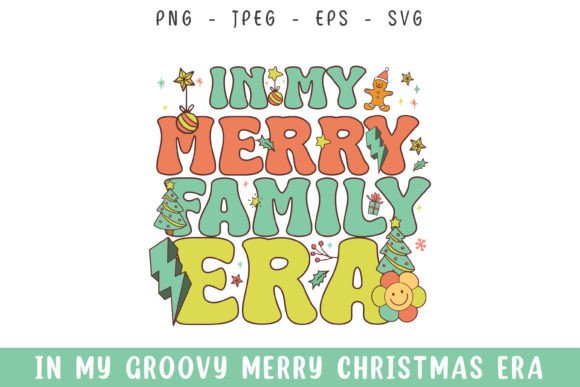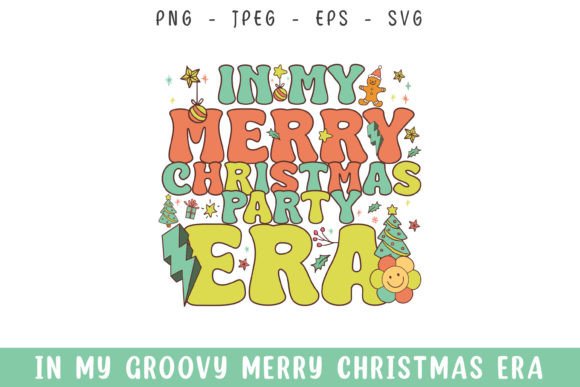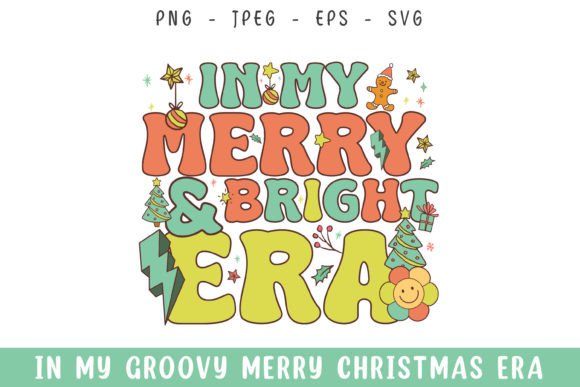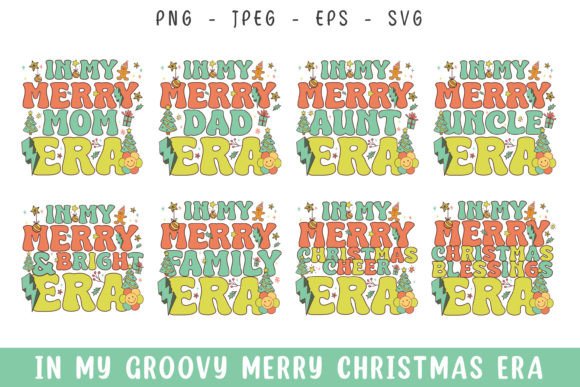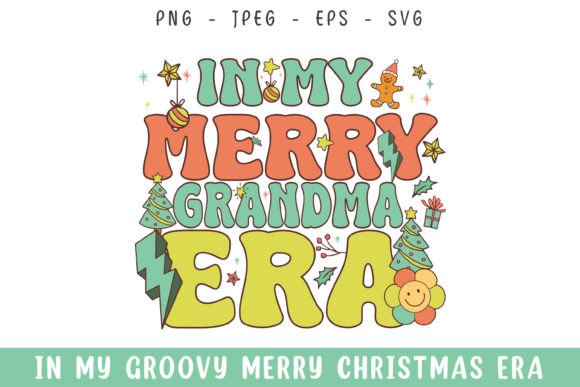
In My Merry Grandma Christmas Era Groovy Review
As a designer who spends half my life staring at stitch charts and the other half worrying about how a finished product will look on a customer’s chest, I don’t just buy embroidery files; I stress-test them. When In My Merry Grandma Christmas Era Groovy landed in my inbox, my first instinct was to check the file structure, but my second instinct was to imagine it stitched out. This isn’t just another holiday graphic slapped onto a digital canvas; it is a design that demands to be seen in thread. For those of us running small shops, selling on Etsy, or creating personalized gifts for family, the difference between a "nice" design and a "sellable" one often comes down to personality and practicality. Here is my honest take on how this piece holds up when moving from screen to hoop.
The First Impression: Mood and Visual Personality
The moment you open the file, the vibe is unmistakable. We are living in an era where nostalgia sells, and this design leans heavily into that retro, groovy aesthetic without feeling dated or cheesy. The typography has that distinct mid-century modern flair, softened by the playful "Merry Grandma" messaging. It feels warm, approachable, and slightly rebellious in the best way possible. It doesn’t scream "holiday cliché"; it whispers "cool aunt energy."
From a layout perspective, the balance is excellent. The text curves naturally, which guides the eye smoothly across the design. For a machine embroidery design, this curvature is crucial because it allows for better stitch flow compared to rigid, blocky text. The visual weight is centered, making it forgiving if your hooping isn’t perfectly aligned—a common reality in busy craft businesses. It creates a mood that is festive but sophisticated enough for adult wear, yet sweet enough for a baby’s onesie. That versatility is rare in holiday graphics.
Real-World Application: Where Does It Shine?
I put this design through its paces with a specific scenario in mind: creating a boutique line of holiday gifts for a local craft fair. I envisioned a custom embroidered tote bag made of sturdy canvas, paired with a cozy sweatshirt for the grandmother herself. In these contexts, In My Merry Grandma Christmas Era Groovy performs exceptionally well.
On a tote bag, the design acts as a statement piece. Because the background fabric is usually neutral (black, white, or kraft), the colors pop without competition. For a sweatshirt embroidery project, the retro theme fits perfectly with the texture of fleece or cotton blends. It feels like something you would actually want to wear while opening presents, not just a costume piece. I also considered using it for an embroidered patch attached to a denim jacket. The bold lines hold up well even when reduced slightly in scale, provided you use the right stabilizer.
Furthermore, this design bridges the gap between personal and commercial use beautifully. It works as a heartfelt personalized gift for a matriarch who appreciates style, but it also has broad appeal for anyone looking for a unique holiday sweater. For an Etsy seller, this means you can market it not just as "Christmas gear," but as "retro holiday fashion." That distinction matters. It elevates the perceived value of the handmade product, allowing you to price it higher than a standard clip-art holiday shirt.
Technical Performance and Stitch Clarity
When evaluating an embroidery file, I always look at how the different stitch types interact. This design likely utilizes a mix of satin stitches for the lettering outlines and fill stitches for any decorative elements. The key here is stitch density. If the density is too high, the fabric will pucker; if it’s too low, the backing will show through. Based on the clean lines of the source image, this appears to be optimized for standard home machines, though industrial users should still test for speed.
One of the strongest technical aspects is the adaptability of the color palette. As noted in the description, it is possible and easy to change color for a dark background. This is a critical feature for designers. A design that only looks good on white is limited. Being able to swap bright threads for metallics or deep jewel tones on black fabric opens up new product possibilities. Imagine this in gold metallic thread on a black hoodie—it transforms from cute to chic instantly. However, you must ensure your thread choices have enough contrast against the fabric. Dark-on-dark can look muddy if the shades are too similar, so always inspect small details in black and white mockups before committing to production.
Where Caution Is Required
No design is perfect for every surface. There are specific scenarios where In My Merry Grandma Christmas Era Groovy might struggle, and knowing these boundaries protects your reputation.
- Small Hoop Sizes: If you attempt to digitize or resize this significantly smaller than its original dimensions, the intricate curves of the retro font may lose clarity. Tiny lettering becomes illegible after stitching, especially if the stitch count isn't precise.
- Textured and Stretchy Fabrics: Avoid placing this on highly textured fabrics like chunky knits or bouclé unless you are experienced with heavy stabilizers. The design relies on smooth surfaces to maintain its crisp edges. Similarly, on stretchy fabrics like thin jersey, the tension might cause distortion if not stabilized properly.
- Curved Surfaces: While great for flat items like aprons or pillow covers, applying this to a curved surface like a baseball cap requires careful padding and positioning. The text curve might not align perfectly with the natural dome of a hat without significant adjustment.
- Dense Stitch Areas: If the design includes dense fill areas, avoid using it on thin fabrics that might see-through. Frequent washing can also degrade the appearance of dense stitching over time, so advise customers on care instructions.
Impact on Brand and Customer Trust
Using a well-executed design like this directly impacts your brand consistency. Customers can tell the difference between a rushed, pixelated print and a thoughtfully designed embroidery file. When you offer In My Merry Grandma Christmas Era Groovy, you are signaling that you pay attention to trends and quality. It builds trust because the design feels intentional.
For digital product sellers, this design is a strong asset. High-quality printable mockups featuring this design will attract more clicks because the visual appeal is immediate. It stands out in a sea of generic snowman graphics. For craft business owners, having a design that appeals to both the "hippie" demographic and the traditional holiday shopper expands your market reach. It is a conversation starter, which drives engagement at craft fairs and online interactions.
Practical Designer Notes for Execution
Before you upload this to your machine or list it on your shop, follow these steps to ensure success:
- Test on Scrap Fabric: Never run a new design directly onto your final product. Use scraps of the exact fabric type to check tension and stability.
- Check Thread Color Contrast: Lay out your thread spools next to the fabric. Ensure the lightest and darkest threads provide enough separation to define the shapes.
- Review Stitch Density: Zoom in on the digital preview. Are there any overly dense areas that might cause needle breaks? Adjust if necessary.
- Confirm Hoop Size: Ensure your machine’s hoop can accommodate the full design width and height without trimming.
- Inspect Small Details: Look closely at the corners of letters and any fine lines. These are the first things to fail if the digitization is poor.
- Test in Black and White: Convert the design to grayscale to check balance. If it looks unbalanced in gray, it will look unbalanced in color.
- Verify Licensing: Check whether the license allows for commercial use. If you plan to sell finished items, you need explicit permission. Do not assume.
Ultimately, In My Merry Grandma Christmas Era Groovy is a solid addition to any embroiderer’s library. It balances trendiness with timeless sentiment, offering a versatile tool for creating memorable handmade products. Just remember: the design is only as good as the execution. Take your time, stabilize properly, and let the groove shine.